Tending the Earth, Feeding the Soul: How St. Barbara's Parish Garden Is Uniting Faith and Stewardship

Photo by Photo by Valentina Troncoso on Unsplash on Unsplash
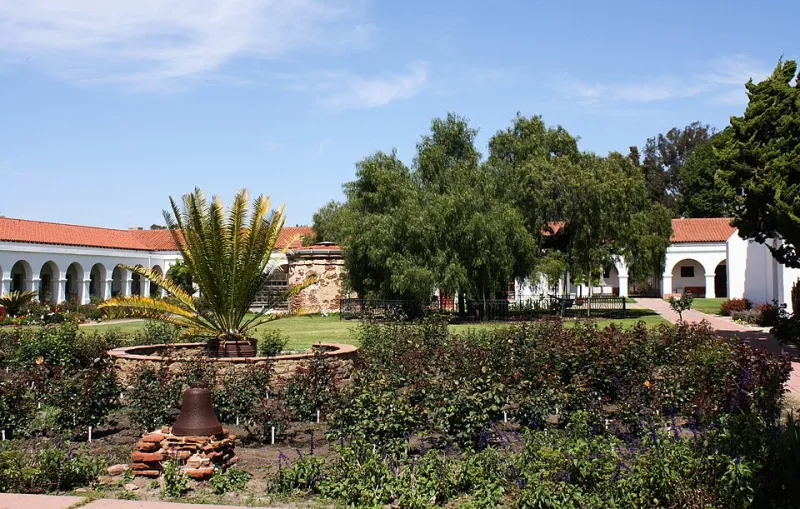
There is something quietly profound about kneeling in dark soil beneath the California sun, hands pressed into the earth, coaxing life from a seed. For the growing number of parishioners who gather each week in the garden behind St. Barbara's Catholic Church, that act of cultivation has become a form of prayer — unhurried, embodied, and deeply connected to the faith they profess inside the church doors just a few yards away.
What began several years ago as a modest raised-bed vegetable plot tended by a handful of dedicated parishioners has since expanded into a thriving ministry that encompasses composting stations, seasonal planting schedules, a fruit tree orchard, and a structured food distribution program that delivers fresh produce to local families facing food insecurity. The garden, known informally among parishioners as the St. Barbara's Creation Care Garden, has become one of the most visible expressions of the parish's commitment to living the Gospel in practical, tangible ways.
Rooted in Catholic Teaching on Creation
The theological foundation for this ministry is neither incidental nor improvised. Catholic social teaching has long emphasized the human responsibility to care for the natural world as an act of reverence toward God the Creator. Pope Francis, in his landmark encyclical Laudato Si', called all Catholics to recognize the Earth as "our common home" and to respond to environmental degradation with both moral urgency and communal action. At St. Barbara's, the garden ministry takes that call seriously — not as a political statement, but as a spiritual discipline.
Volunteers frequently cite Laudato Si' as a catalyst for their involvement. "When I read the Holy Father's words about integral ecology, I realized that caring for creation wasn't separate from my faith — it was part of it," said one longtime parishioner who now coordinates the Thursday morning planting sessions. "Coming out here each week feels like an extension of the Mass. We receive nourishment inside, and then we go out and help provide it for others."
The parish's pastoral team has intentionally woven Scripture and reflection into the rhythm of the garden ministry. Brief prayer intentions are offered at the start of each volunteer session, and seasonal blessings — drawn from the Church's rich tradition of blessing fields and harvests — mark key moments in the agricultural year.
From Compost to Community
The practical mechanics of the garden are as thoughtfully considered as its spiritual dimensions. A two-bin composting system, maintained by a rotating team of volunteers, processes kitchen scraps donated by parish families and transforms organic waste into rich amendment for the garden beds. Raised planters built from reclaimed lumber host rotating crops of tomatoes, zucchini, kale, peppers, and herbs, while a drip irrigation system — installed with the help of a local Catholic-owned landscaping company — ensures water is used as efficiently as possible in Santa Barbara's semi-arid climate.
The harvest does not remain on parish grounds. Each Friday, fresh produce is boxed and delivered through a partnership with a local food pantry that serves families across the greater Santa Barbara area. During peak growing seasons, the garden has supplied upward of several hundred pounds of vegetables per month — a contribution that has drawn expressions of gratitude from pantry coordinators and recipients alike. For many parishioners, those delivery runs are as spiritually meaningful as the planting itself.
"When I hand a family a box of vegetables that I watched grow from seed, something happens in me that I can only describe as grace," reflected one volunteer who has participated in both the gardening and the distribution. "It closes a circle. You see the whole journey — from the soil to the table — and you understand in a new way what it means to be a neighbor."
Voices from the Garden
The ministry draws participants across a remarkable range of ages and backgrounds. Retired schoolteachers work alongside college students from a nearby university. Families bring young children on Saturday mornings, turning the garden into an informal classroom where lessons about photosynthesis and the seasons are inseparable from conversations about gratitude and responsibility. One family with three children under the age of ten has made the Saturday sessions a fixture of their weekly routine.
"Our kids have learned where food actually comes from," their mother explained. "But more than that, they've learned that growing something for someone else — someone you may never meet — is one of the most beautiful things you can do. That's a lesson I couldn't teach them from a book."
For older parishioners, the garden has offered an unexpected form of pastoral renewal. Several individuals who joined the ministry during periods of personal difficulty have spoken about the therapeutic quality of working with their hands in a community of faith. "Grief can make you feel very disconnected from the world," one widower shared quietly. "Being in this garden, among these people, brought me back. The earth is patient. It keeps growing. That helped me."
Practical Guidance for Other Parishes
St. Barbara's pastoral leadership has been intentional about documenting what has worked — and what has required adjustment — so that other parishes interested in launching a similar ministry might benefit from the experience.
Several principles have emerged as especially important. First, begin with a clear spiritual framework. A garden ministry that is grounded explicitly in Catholic teaching — rather than organized primarily around environmental activism — tends to draw broader participation and sustain volunteer engagement over time. Regular prayer, Scripture reflection, and connection to the liturgical calendar help maintain that identity.
Second, identify a dedicated coordinator early. The ministry functions best when one or two individuals take responsibility for planning, communicating with volunteers, and liaising with community partners. Shared ownership is valuable, but diffuse leadership often results in inconsistency.
Third, cultivate partnerships beyond the parish. Relationships with local food pantries, Catholic Charities affiliates, and diocesan offices for justice and peace can provide both logistical support and a broader sense of mission. At St. Barbara's, the connection to the local food distribution network has been essential to the ministry's sustainability and impact.
Finally, celebrate the harvest — literally and liturgically. An annual Blessing of the Garden, ideally tied to a feast day or a moment in the growing season, invites the broader parish community to engage with the ministry and honors the labor of those who tend it throughout the year.
An Invitation to Grow
The Creation Care Garden at St. Barbara's is not simply a horticultural project. It is a living expression of the parish's conviction that faith must bear fruit — in transformed hearts, in strengthened community, and in concrete service to those who are hungry. In the words of one volunteer who has tended the garden from its earliest days: "Every seed we plant is an act of hope. And hope, in this faith, is never wasted."
Parishioners interested in joining the garden ministry are warmly encouraged to attend an upcoming orientation session. Details regarding volunteer schedules, seasonal programs, and donation opportunities are available through the parish office and on the St. Barbara's website. Whether you come with a green thumb or no gardening experience whatsoever, there is a place for you in this ministry — and in this community.
For more information about the Creation Care Garden or to learn how to support the parish food distribution program, please contact the St. Barbara's Parish Office or visit stbarbarascatholicchurch.com.