Holy Companions on the California Coast: The Saints Who Shaped Our Spiritual Home
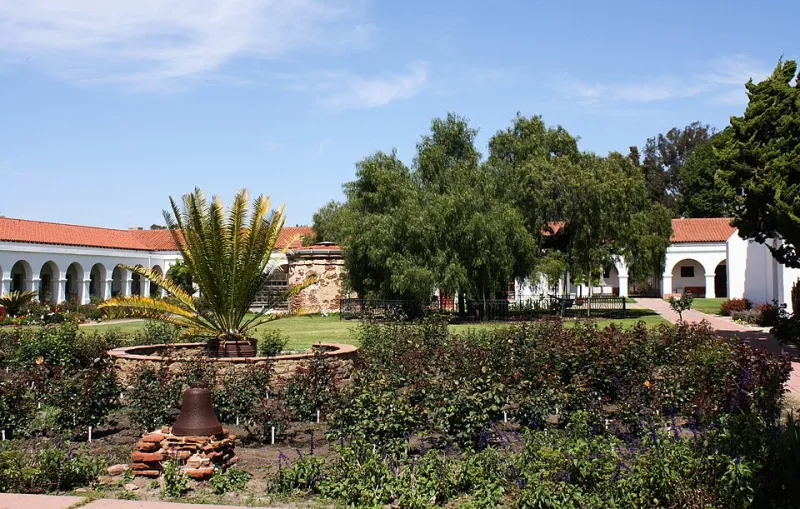
Photo: Bernard Gagnon, CC BY-SA 3.0, via Wikimedia Commons
More Than a Name on a Church Door
When parishioners step through the doors of St. Barbara's, they carry with them two thousand years of Catholic witness. Our patroness, Saint Barbara, is a beloved and formidable figure—a martyr whose courage under persecution has inspired countless faithful across the centuries. But the spiritual heritage of Santa Barbara, California, is not a single thread. It is a rich tapestry woven from the lives of many saints, missionaries, and holy men and women whose stories continue to speak to the challenges of contemporary Catholic life.
This article is an invitation to look more closely at that tapestry—to meet the lesser-known but deeply important figures connected to our regional Catholic history, and to consider what their witness might mean for us today.
The Franciscan Missionaries: Saints of the Road
The Catholic roots of Santa Barbara stretch back to the late eighteenth century, when Franciscan missionaries established their presence along the California coast. Among the most significant figures in this chapter of our history is Saint Junípero Serra, canonized by Pope Francis in 2015. Father Serra's story is complex and continues to generate thoughtful conversation within the Church—a conversation that is itself a model of faithful engagement with history. His tireless evangelization of California, carried out under extraordinary physical hardship, planted the first seeds of Catholic community in this region.
Less frequently discussed is the broader community of Franciscan friars who worked alongside Serra. Many of these men—anonymous in the historical record—lived lives of radical simplicity and self-giving that the Rule of Saint Francis demanded. Their example challenges modern Catholics to ask a searching question: In an age of comfort and distraction, what does it mean to truly detach from material security in service of the Gospel?
For families seeking to ground their faith formation in something local and concrete, learning the stories of these early missionaries offers a powerful starting point. Their willingness to journey into the unfamiliar speaks directly to the spiritual courage required of Catholic parents raising children in a secular culture.
Saint Francis of Assisi: The Spirit Behind the Mission
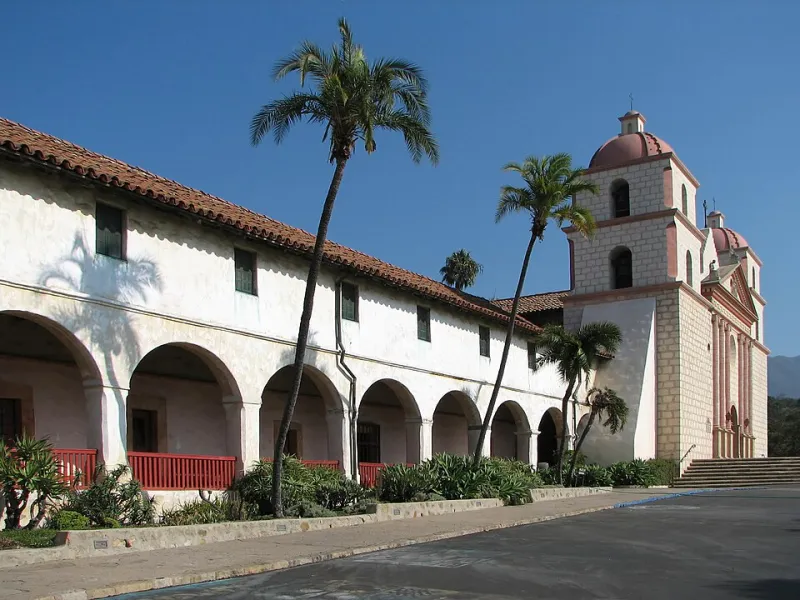
Because the Santa Barbara Mission was founded and administered by the Franciscan order, Saint Francis of Assisi holds a particular place in the spiritual heritage of our diocese—even though he lived in thirteenth-century Italy, centuries before California was evangelized. The Old Mission Santa Barbara, still active today and sometimes called the Queen of the Missions, bears the Franciscan imprint in its architecture, its community life, and its ongoing ministry.
Saint Francis offers modern Catholics something urgently relevant: a spirituality of simplicity that resists the acquisitive pressures of contemporary American life. His famous Canticle of the Creatures, one of the earliest works of Italian literature, celebrates creation as a gift rather than a resource to be exploited. At a moment when Catholics across the country are grappling with questions of environmental stewardship—a concern Pope Francis has addressed directly in Laudato Si'—the example of the saint from Assisi provides not only inspiration but a theological framework.
Parishioners who wish to deepen their connection to this Franciscan dimension of our heritage might consider joining or exploring the Secular Franciscan Order, a lay community with a presence in the greater Santa Barbara area. This centuries-old tradition offers a structured way to live Franciscan values within ordinary family and professional life.
Saint Junipero Serra and the Complexity of Sanctity
Any honest engagement with the saints connected to Santa Barbara's history must reckon with the questions that have arisen around Serra's legacy, particularly concerning the impact of the mission system on California's Indigenous peoples. The Church does not propose the saints as perfect human beings. Rather, it holds them up as witnesses to the grace of God working through flawed and historically situated individuals.
For Catholic families and educators, Serra's complicated legacy presents a genuine teaching opportunity. How do we hold together admiration for a person's genuine faith and courage with honest acknowledgment of harm done? This is not merely a historical question—it is the very question that the sacrament of reconciliation asks us to apply to our own lives. The saints are not stained-glass abstractions. They are human beings who, like us, operated within the limits of their time and culture, and who nevertheless allowed God to work powerfully through them.
Engaging this complexity with our children, in age-appropriate ways, forms them not into naive hagiographers but into thoughtful Catholics capable of holding faith and honesty together.
Our Lady of Guadalupe: A Saint for the Whole Diocese
Any account of the saints shaping Catholic identity in Santa Barbara would be incomplete without honoring Our Lady of Guadalupe. The Diocese of Los Angeles—under whose pastoral umbrella our parish falls—has a deeply Latino and Mexican-American Catholic heritage, and the apparition of Our Lady to Saint Juan Diego in 1531 remains one of the most spiritually significant events in the history of the Americas.
Our Lady of Guadalupe is not a peripheral figure in the life of Santa Barbara's Catholic community. Her image appears in homes, businesses, and places of prayer throughout the region. Her feast day, December 12th, is celebrated with particular joy and solemnity in many of our neighboring parishes. For parishioners of Latino heritage, she is a symbol of dignity, of God's preferential love for the humble, and of the inculturated beauty of Catholicism in the New World.
For those whose background lies elsewhere, encountering Our Lady of Guadalupe is an invitation into the breadth of Catholic tradition—a reminder that the Church's sanctity is not uniform but gloriously diverse, expressed through the particular cultures and histories of God's people across the globe.
Letting the Saints Form Us
The Second Vatican Council's Dogmatic Constitution on the Church, Lumen Gentium, describes the saints as our companions on the journey toward God—not distant intercessors to be invoked in emergencies, but fellow pilgrims whose lives illuminate the path. When we understand the saints connected to our own place—the missionaries who walked our coastline, the poor man of Assisi whose spirit built our Mission, the Aztec peasant to whom the Mother of God appeared—we find that our faith is not abstract or disembodied. It is rooted in soil, in history, in community.
We encourage every parishioner to choose one saint from our regional heritage this year and spend time in genuine study and prayer with that figure. Read a biography. Attend a feast day Mass. Ask that saint to intercede for a specific challenge you are carrying. The communion of saints is not a doctrine to be memorized. It is a relationship to be entered.
Our spiritual ancestors are waiting to be known.