Faithful Under Fire: What St. Barbara's Defiance Teaches Catholics Living in a Secular Age
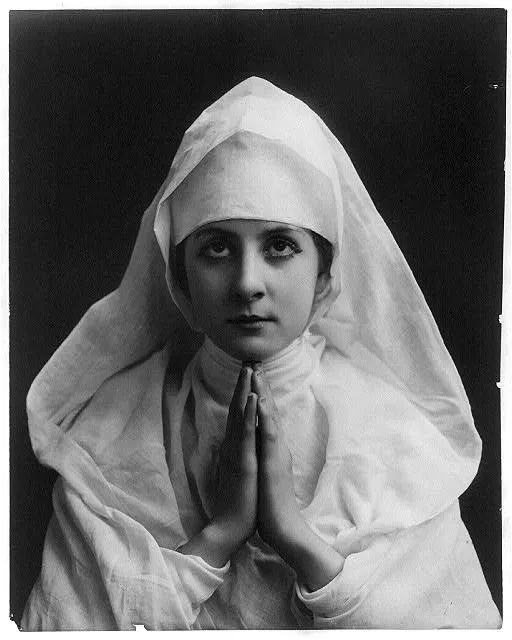
Photo: Miscellaneous Items in High Demand, PPOC, Library of Congress, Public domain, via Wikimedia Commons
There is something quietly startling about the story of St. Barbara. Here was a young woman who did not face her greatest trial in a public arena or on a distant battlefield. She faced it at home, at the hands of her own father, a man named Dioscorus who could not comprehend why his daughter would choose a faith he considered threatening to everything he valued. Her defiance was not loud or theatrical. It was steady, rooted, and ultimately unshakeable — and that steadiness is precisely what makes her story so relevant to Catholics living in the United States today.
Modern Catholics rarely face the physical dangers St. Barbara endured. Yet the interior pressure she experienced — the expectation that she would simply conform, blend in, and set aside what she believed to preserve the peace — is a pressure that many parishioners at St. Barbara's Church know well.
A Story Rooted in Refusal
The historical record surrounding St. Barbara comes to us through hagiographic tradition rather than verifiable biography, yet her story has endured for centuries precisely because it names something true about the human experience of faith. According to tradition, Barbara was the daughter of a wealthy pagan nobleman in the third or fourth century. Her father, recognizing her beauty and intelligence, sought to protect her by confining her to a tower — a detail that reads less like protection and more like control.
During her confinement, Barbara encountered Christianity and embraced it with complete conviction. When her father commissioned a bathhouse to be built for her, she reportedly instructed the workers to add a third window to the original two, a symbolic gesture honoring the Trinity. When Dioscorus discovered that his daughter had become a Christian, he did not simply disapprove. He reported her to the Roman authorities himself, an act of betrayal that ultimately led to her martyrdom.
What strikes the careful reader of her story is not merely that she died for her faith, but that she was willing to lose her father's approval — and her father himself — rather than betray what she had come to know as true.
The Pressure That Doesn't Announce Itself
For Catholics in contemporary America, the threats to faith rarely arrive with the clarity of a Roman tribunal. They arrive in subtler forms: a workplace culture that treats religious observance as an inconvenient eccentricity, a family dinner where a comment about Mass attendance draws laughter rather than respect, a social media environment that frames Catholic moral teaching as either irrelevant or unkind.
These pressures do not demand that we formally renounce our faith. They simply ask, repeatedly and persistently, that we keep it quieter. That we soften the edges. That we choose belonging over conviction, one small compromise at a time.
St. Barbara's story offers a counterweight to that gradual erosion. Her witness reminds us that faith is not a private preference to be managed politely in public but a relationship with the living God that shapes every dimension of a person's life. She did not compartmentalize. She did not negotiate the terms of her belief to make others more comfortable. And while her circumstances were extreme, the interior posture she modeled — clarity, charity, and courage held together — is one that every Catholic can aspire to cultivate.
Standing Firm Without Building Walls
One of the more nuanced aspects of Barbara's witness is that her defiance was never rooted in contempt for those who disagreed with her. The tradition does not portray her as angry or self-righteous. She is depicted as someone who had encountered something real and could not pretend otherwise — not because she wished to antagonize her father, but because honesty demanded it.
This distinction matters enormously for modern Catholics who sometimes feel they must choose between authentic witness and genuine relationship. The example of St. Barbara suggests that these are not mutually exclusive. Maintaining one's convictions does not require hardening one's heart toward those who hold different ones.
In practical terms, this might look like a young professional who attends daily Mass before work and speaks about it without apology when asked, while remaining genuinely curious about the lives of colleagues who do not share that practice. It might look like a parent who insists on Sunday Mass as a non-negotiable family commitment while creating space for their teenager to ask honest questions about why it matters. It might look like a spouse who continues to pray quietly and visibly in a household where faith is not shared, without weaponizing that practice as a form of reproach.
Finding Community as an Anchor
One of the reasons St. Barbara's story resonates so deeply within our parish community is that it illuminates the importance of belonging to something larger than oneself. Barbara, isolated in her tower, found a faith that connected her to a community she had never physically met — the Body of Christ across time and place. That connection sustained her when every earthly relationship failed her.
For parishioners who feel isolated in their faith — whether in a workplace, a neighborhood, or even a family — the parish itself is meant to serve this function. The Sunday assembly, the adult faith formation programs, the small faith communities that meet throughout the week: these are not supplementary additions to Catholic life. They are the connective tissue that makes sustained witness possible.
If you find yourself feeling the weight of cultural pressure on your faith, we encourage you to consider this not merely as a personal struggle but as an invitation to draw more deeply on the community around you. St. Barbara did not endure in isolation. She endured because she had found something that was worth belonging to.
A Patron for This Moment
We at St. Barbara's Church bear the name of a woman who understood what it cost to remain faithful when the world — and even those closest to her — demanded otherwise. Her intercession is not a relic of another age. It is a living resource for Catholics who face, in their own way, the same fundamental question she faced: will I choose the approval of those around me, or will I remain true to the One who knows me most fully?
St. Barbara's answer was clear. May her example give us the courage to find our own.