When Sorrow Meets Community: The Healing Ministries That Carry St. Barbara's Parishioners Through Loss
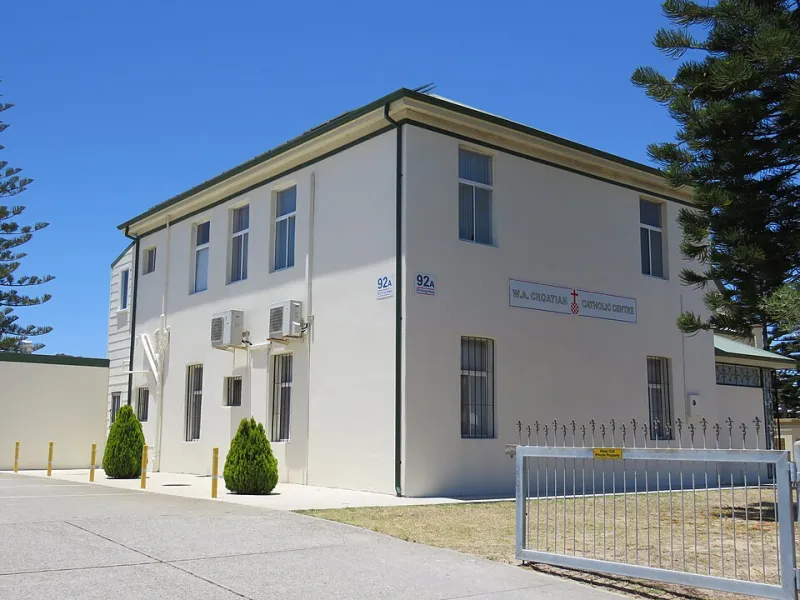
Photo: Calistemon, CC BY-SA 4.0, via Wikimedia Commons
Grief is one of the most disorienting experiences a human being can endure. It arrives without warning, reshapes the familiar contours of daily life, and can leave even the most devout person questioning where God stands amid the silence. At St. Barbara's Catholic Church, the pastoral response to this universal human reality is neither casual nor improvised. It is deliberate, theologically grounded, and sustained by a community that understands mourning as a sacred passage rather than a problem to be solved.
A Parish That Acknowledges the Weight of Loss
The Catholic tradition has always held that grief, when carried within the arms of faith and fellowship, need not be endured in isolation. St. Barbara's takes this teaching seriously. The parish's pastoral care ministry has evolved over many years into a structured yet deeply personal framework, one that meets parishioners at the earliest moments of loss and walks alongside them through the long, often unpredictable journey of bereavement.
Father Michael Reyes, one of the parish's associate pastors and a trained pastoral counselor, describes the parish's philosophy plainly: "We do not ask people to grieve quickly or quietly. The Church has always made room for lament. Our role is to be present — genuinely, patiently present — and to point, again and again, toward the hope that Christ's resurrection offers, even when that hope feels impossibly distant."
This posture of patient accompaniment shapes everything from the way the parish communicates with newly bereaved families to the long-term support structures available months and even years after a loved one has passed.
The Grief Support Group: A Circle of Shared Witness
Among the most visible of St. Barbara's bereavement ministries is its weekly grief support group, which meets every Thursday evening in the parish hall. Open to all parishioners — and, notably, to members of the broader Santa Barbara community who may not be registered at the parish — the group follows a format that blends structured reflection with open conversation.
Participants are guided through themes drawn from Catholic teaching on death, resurrection, and the communion of saints, but the sessions are not lectures. They are, by design, spaces for honest witness. Members are encouraged to speak truthfully about their experiences, including the anger, confusion, and spiritual doubt that often accompany loss — emotions that are sometimes treated as inappropriate in religious settings but which St. Barbara's pastoral team regards as entirely valid expressions of a wounded heart.
Margaret Holloway, a parishioner who lost her husband of 41 years to a sudden cardiac event in 2021, credits the group with helping her find a path forward. "I came to that first meeting expecting to be told to pray more and trust God," she recalls. "What I found instead were people who had been through the worst moments of their lives and were willing to sit with me in mine. Nobody tried to fix my grief. They just helped me carry it."
Over time, Margaret became a facilitator herself — a pattern the parish actively encourages, as those who have moved through acute grief often become the most credible voices of hope for those newly entering it.
Prayer Circles and the Ministry of Intercession
Alongside the support group, St. Barbara's maintains a robust network of prayer circles specifically dedicated to those in mourning. Coordinated through the parish's broader intercessory prayer ministry, these circles ensure that bereaved parishioners are lifted in prayer not just in the immediate aftermath of a loss, but consistently over the weeks and months that follow.
Enrollment in a prayer circle is simple: a parishioner, family member, or friend may submit a name through the parish office or the church website, and that individual becomes part of a sustained, communal prayer intention. The circles meet twice weekly, and members receive brief written reflections tied to the liturgical calendar — a gentle reminder that the Church's rhythm of seasons and feasts continues even when personal life feels suspended.
"There is something profoundly comforting about knowing that people you may not even know by name are praying for you," says Deacon Thomas Aguilar, who coordinates the intercessory prayer ministry. "It is the Body of Christ functioning as it was meant to — each part bearing the burdens of the others."
One-on-One Pastoral Counseling: The Gift of Undivided Attention
For parishioners whose grief is particularly acute, or whose circumstances involve complexity — sudden or traumatic death, the loss of a child, or bereavement compounded by difficult family dynamics — St. Barbara's offers individual pastoral counseling through its clergy and trained lay ministers. Sessions are available by appointment and are offered at no cost to parishioners.
The parish also maintains relationships with licensed Catholic therapists and counselors in the Santa Barbara area, to whom pastoral staff may offer referrals when clinical support is appropriate alongside spiritual accompaniment. This integrated approach reflects the Church's understanding that the human person is not merely a soul, but a whole being whose emotional and psychological health is inseparable from spiritual well-being.
For David and Renata Espinoza, who lost their teenage son in a car accident three years ago, the combination of pastoral counseling and a referral to a licensed grief therapist was essential. "Father Reyes met with us every week for the first two months," David says. "He never pretended to have answers. He prayed with us, he cried with us, and he helped us figure out how to keep going to Mass when Mass felt unbearable. That kind of presence changed us."
Bereavement Support Around the Liturgical Year
St. Barbara's also attends to the particular tenderness of grief during the liturgical seasons. The parish holds a special All Souls' Day memorial Mass each November 2nd, at which the names of all parishioners who have died in the preceding year are read aloud and honored. Families are invited to bring photographs of their loved ones, which are displayed near the altar throughout the month of November — a visual reminder of the communion of saints that transcends death.
During Advent and Christmas — seasons that can be especially painful for those experiencing their first holidays after a loss — the parish grief ministry offers an informal gathering called "Blue Christmas," a quiet, contemplative prayer service designed for those who find the season's festivity difficult to navigate. The service has drawn participants not only from St. Barbara's but from neighboring communities, speaking to a need that extends well beyond any single congregation.
An Invitation to the Brokenhearted
Perhaps the most important thing St. Barbara's communicates to those in grief is this: you are not required to present a composed face to your parish community. Mourning is not a private matter to be managed behind closed doors. It is a human experience that the Body of Christ is called to share, and St. Barbara's has built its pastoral care ministry on that conviction.
If you or someone you love is navigating loss, we invite you to reach out to the parish office. Whether you are seeking a listening ear, a prayer companion, a support group, or simply information about what resources are available, our pastoral team is ready to accompany you. In the words of Scripture that guide our ministry: "Blessed are those who mourn, for they shall be comforted" (Matthew 5:4). At St. Barbara's, that comfort is not merely a promise for the next life — it is something we strive to offer one another, here and now.