Rising From the Ruins: How St. Barbara's Journey Speaks to Catholics Who Are Starting Over
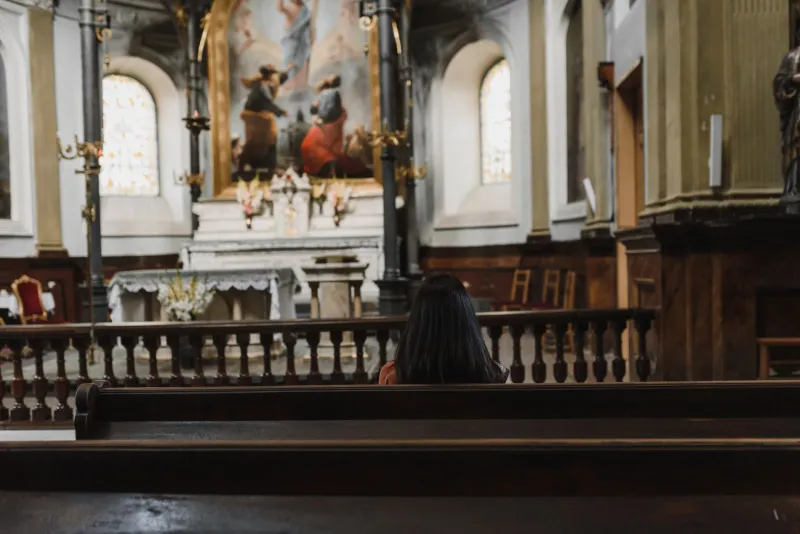
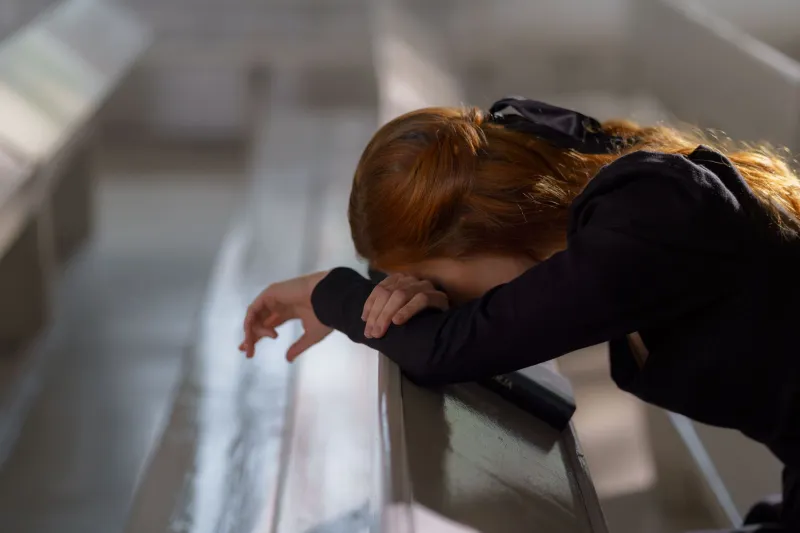
There is a particular kind of silence that follows collapse. It is not the peaceful quiet of a contemplative morning or the still hush before Mass begins. It is the silence of a life that has come undone — a career that ended badly, a marriage that broke apart, a trust that was shattered, a version of oneself that no longer exists. Many Catholics who have walked through that silence know how disorienting it can be to carry such weight into a pew and wonder whether God still sees them.
St. Barbara knew something of that silence. Betrayed by her own father, imprisoned, and ultimately handed over to suffering she had not earned, she was stripped of every external protection the world might offer. What remained was her faith — and that faith, it turned out, was more than enough.
For the parishioners of St. Barbara's Catholic Church in Santa Barbara, her story is not merely historical. It is pastoral. It speaks directly to anyone who finds themselves standing in the wreckage of something they once built and wondering how to begin again.
A Saint Who Did Not Choose Easy Ground
The details of St. Barbara's life, as passed down through Christian tradition, are not gentle ones. She lived under the authority of a father who sought to control her entirely — her movements, her beliefs, her future. When she embraced the Christian faith and refused to abandon it, she was not met with tolerance or negotiation. She was condemned.
What strikes many spiritual directors about her story is not the drama of her martyrdom but the interior posture she maintained throughout. She did not respond to her father's betrayal with bitterness. She did not collapse into despair when the structures meant to protect her became instruments of harm. She turned inward toward God, and in doing so, she discovered a foundation that no external failure could erode.
This is the spiritual inheritance she offers to those who invoke her intercession today — not immunity from suffering, but the grace to be transformed by it.
Failure Is Not the Final Word
American culture tends to treat failure as something to be overcome as quickly and quietly as possible. We admire the comeback story, but we are often uncomfortable sitting with the period of genuine loss that precedes it. The Catholic tradition, by contrast, does not rush past suffering. It asks us to enter it with honesty, to allow it to do its work, and to trust that God is present even in the most desolate seasons.
This is not passive resignation. It is an active and demanding form of faith.
For Catholics rebuilding after a professional setback — a business that failed, a career derailed by circumstances beyond their control, a reputation damaged by their own poor choices — St. Barbara's witness offers a clarifying lens. Her suffering was not a punishment to be escaped but a passage to be traversed. The question she implicitly poses to anyone in a season of rebuilding is this: What are you willing to let go of, and what are you determined to carry forward?
The same question applies to those recovering from broken relationships. Whether a marriage has ended, a friendship has dissolved, or a family has been fractured by conflict, the path forward rarely looks like the path that came before. St. Barbara did not return to the life she had before her imprisonment. She moved through it into something altogether different — and, in the eyes of the Church, altogether greater.
Finding Support Within the Parish
St. Barbara's parish does not ask its members to rebuild in isolation. The pastoral care ministries available to congregants reflect a deep conviction that healing is communal work, not merely private struggle.
For those navigating significant life transitions, the parish's pastoral care team offers confidential conversations with trained ministers who are equipped to listen without judgment and to connect individuals with appropriate resources — whether that means professional counseling referrals, spiritual direction, or simply a consistent point of human contact during a difficult season.
Small faith-sharing groups, which meet regularly throughout the year, provide another avenue for those who are rebuilding. There is something quietly powerful about sitting with a small group of fellow Catholics and discovering, often for the first time, that others have walked through similar terrain. The isolation that so often accompanies failure begins to loosen when it is brought into the light of shared testimony.
For those whose failures have included moral ones — choices they deeply regret, harm they have caused to others — the Sacrament of Reconciliation remains the most direct and certain path the Church offers. It is worth stating plainly: the sacrament is not reserved for those whose sins feel manageable or small. It is designed precisely for the moments when the weight of what we have done or failed to do feels impossible to carry alone.
A Prayer Practice for Seasons of Rebuilding
Invoking St. Barbara's intercession need not be complicated. A simple, consistent prayer practice can serve as an anchor during the disorienting weeks and months of reconstruction.
Many parishioners find it helpful to begin with a brief examination of conscience — not as an exercise in self-condemnation, but as an honest accounting of where they are. What has been lost? What remains? What is God asking of them in this particular moment?
From that place of honesty, a direct prayer to St. Barbara might follow:
St. Barbara, you who were stripped of every worldly protection and found your security in God alone — pray for me. Intercede for those of us who are learning, painfully and slowly, that we cannot build lasting things on anything less than the foundation you chose. Ask God to grant us the courage to begin again, the humility to accept help, and the patience to trust that what is being built in this season of loss may be more enduring than what came before.
This kind of prayer, offered consistently — perhaps each morning before the demands of the day press in — can gradually shift the interior landscape of someone in the midst of rebuilding. It does not promise that circumstances will change quickly. It does promise that the one praying will not be alone.
The Parish as a Place of Beginning Again
One of the quiet gifts of parish life is that it offers a rhythm that does not depend on our personal circumstances. Mass is celebrated whether we arrive carrying triumph or ruin. The liturgical year moves forward through Advent and Lent, through feast days and ordinary time, regardless of how disordered our own lives may feel. There is a steadying quality to that constancy.
St. Barbara's Catholic Church extends an open and unhurried welcome to anyone who is in a season of starting over. There is no prerequisite of having things together, no expectation of presenting a polished version of oneself. The doors are open to those who are still sorting through the rubble, still uncertain of what comes next, still learning to trust that grace is sufficient for the task ahead.
St. Barbara herself would understand. She did not arrive at her remarkable witness by having everything figured out. She arrived there by choosing, again and again, to remain faithful when faithfulness was costly.
That same choice is available to every one of us — and it is never too late to make it.